

Walk into your office right now and look down. If your first thought is “I hope nobody notices that stain,” your carpet is already telling you something. Most facility managers wait until a client complaint or a bad smell forces the issue — but by then, the damage (and the cost to fix it) is usually bigger than it needed to be .
Here are seven signs your office carpet needs professional cleaning, and why catching them early saves you money, health complaints, and a fair bit of embarrassment.
1. Visible Stains That Won’t Budge
Coffee, tea, and food spills that keep coming back
Spot-cleaning gets the surface stain out, but the residue often sinks deeper into the carpet fibers and backing. A few weeks later, the stain “reappears” as it wicks back up — a classic sign that only a proper deep clean, not another round of spray-and-wipe, will actually solve it.
Stains near workstations and pantry areas
High-traffic zones like the pantry, reception, and meeting rooms take the most punishment. If you’re spot-treating the same patches every month, that’s a budget signal, not just a housekeeping one — professional cleaning breaks the cycle instead of managing it.
2. Persistent Odors You Can’t Place
Musty smells that linger after cleaning
Carpets trap moisture from spills, monsoon humidity, and even foot sweat. Over time, this creates a breeding ground for bacteria and mold spores that regular vacuuming simply can’t reach. If your office smells “off” even after the floors are mopped, the odor is likely coming from below the surface.
Smell that gets worse with the AC on
When central air circulates over a carpet holding trapped moisture, it can actually spread the smell across the floor instead of airing it out. That’s a strong signal the carpet needs extraction cleaning, not just deodorizing spray.
3. Visible Dust, Dirt, or Discoloration in Traffic Lanes
Grey or darkened paths near doors and desks
Carpet fibers act like a filter, pulling in dust, dirt, and pollutants from shoes and airflow. Over months, this builds up in high-traffic lanes — hallways, near entrances, under rolling chairs — leaving visibly darker patches even right after vacuuming.
Vacuuming isn’t cutting it anymore
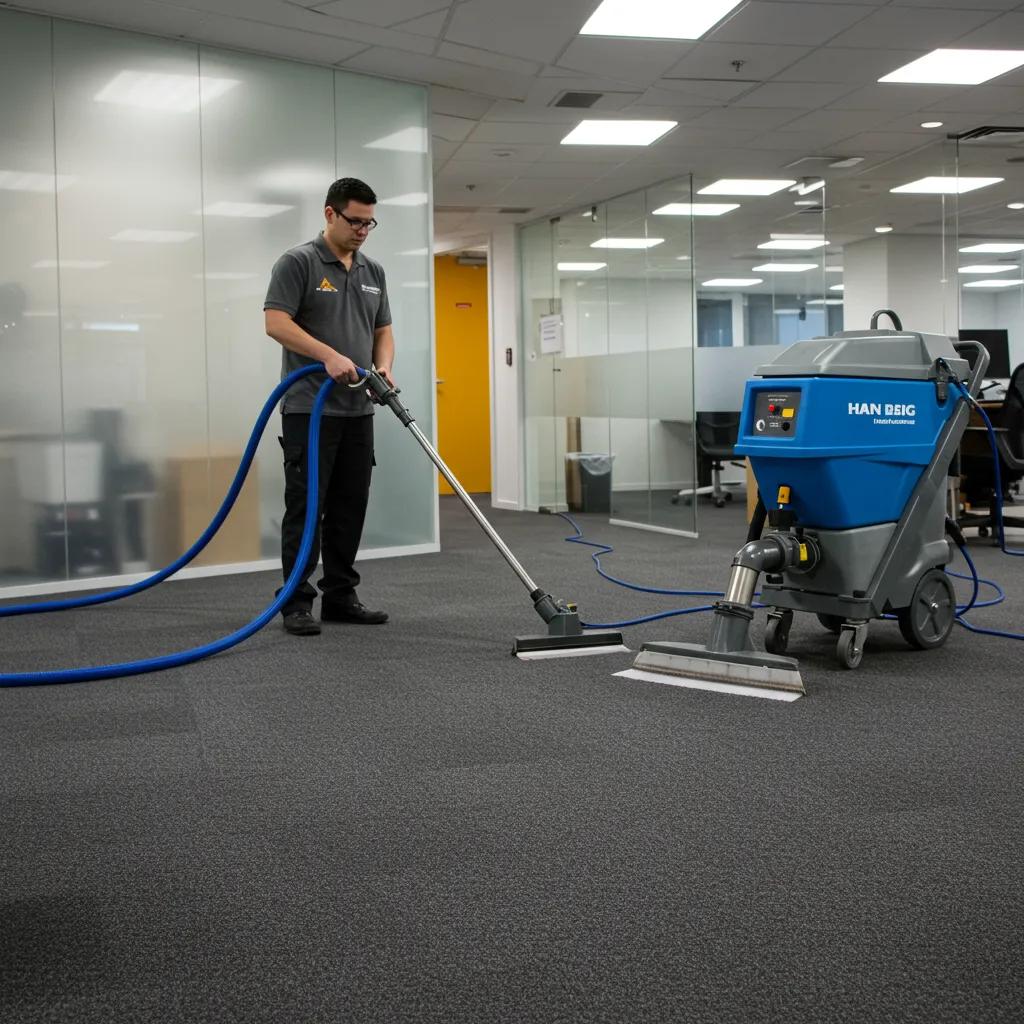
Regular vacuums only lift surface debris. Once dirt is embedded deep in the pile, it needs hot water extraction or steam cleaning to actually pull it out — otherwise you’re just rearranging dust, not removing it.
4. Employees Reporting Allergies or Respiratory Irritation
Sneezing, itchy eyes, or headaches at their desks
Carpets are known to hold onto allergens — dust mites, pet dander (brought in on clothing), pollen, and mold spores — far more than hard flooring does. If multiple employees near the same area are reporting irritation, the carpet is a reasonable first place to check.
Air quality complaints during monsoon or winter
Humidity spikes in monsoon season and closed windows in winter both increase indoor allergen concentration. This is exactly when carpets need professional attention most, since natural airflow that would normally help isn’t available.
5. Carpet Feels Flat, Stiff, or Matted
Fibers that no longer bounce back
A healthy carpet fiber springs back after being walked on. When traffic areas start looking permanently flattened or feel stiff to the touch, it usually means dirt and oils have coated the fibers, weighing them down. Deep cleaning restores texture and can meaningfully extend the carpet’s usable life.
Uneven texture across the floor
If some sections feel noticeably different from others, that’s often a sign of inconsistent wear combined with embedded grime — a pattern that’s hard to fix with anything short of professional-grade equipment.
6. It’s Been Longer Than 6-12 Months Since the Last Deep Clean
Industry guidance for commercial spaces
Facility management best practice generally recommends professional carpet cleaning every 6 to 12 months for office environments, depending on foot traffic. High-traffic spaces — client-facing offices, co-working floors, reception areas — sit at the shorter end of that range.
Warranty and hygiene compliance
Many commercial carpet manufacturers require documented periodic professional cleaning to keep warranties valid. If you can’t remember the last cleaning date, it’s worth checking your maintenance log — or starting one.
7. Clients or Visitors Have Noticed
First impressions are formed in seconds
Whether it’s a client walking into a boardroom or a candidate arriving for an interview, a stained or dull carpet quietly undercuts the professional image you’re trying to project — often before anyone says a word.
A comment is a late warning, not an early one
If a visitor or employee has actually mentioned the carpet’s condition out loud, it means the problem has likely been building for a while. Treat it as a prompt to act, not just an isolated remark.
Why Professional Cleaning Beats DIY for Office Carpets
In-house teams and rental machines can handle light maintenance, but commercial carpets need hot water extraction, the right cleaning agents for different fiber types, and equipment that actually dries the carpet quickly enough to prevent mold regrowth. Get this wrong, and you can end up with a carpet that looks clean but smells worse a week later.
Professional facility management teams also build carpet cleaning into a broader maintenance schedule — pairing it with pest control, deep cleaning, and hygiene audits — so it doesn’t fall through the cracks between one-off requests.
Keep Your Office Carpet — And Your Workplace Image — In Top Shape
A clean carpet isn’t just about appearances. It’s about air quality, employee comfort, and the impression your workplace makes on everyone who walks through the door. If any of these seven signs sound familiar, it’s a good time to schedule a professional deep clean rather than wait for the next complaint.
Get in touch with our facility management team today to schedule a professional carpet cleaning assessment for your office.


